Table of contents
- What is art therapy?
- Why are some situations so difficult?
- Do you recognize this?
- Who is art therapy suitable for?
- How does art therapy work?
- What are the benefits of art therapy?
- Art therapy on location
- Costs and reimbursement of art therapy
- Frequently asked questions about art therapy
- Starting art therapy?
- Art therapy in the neighborhood
What is art therapy?
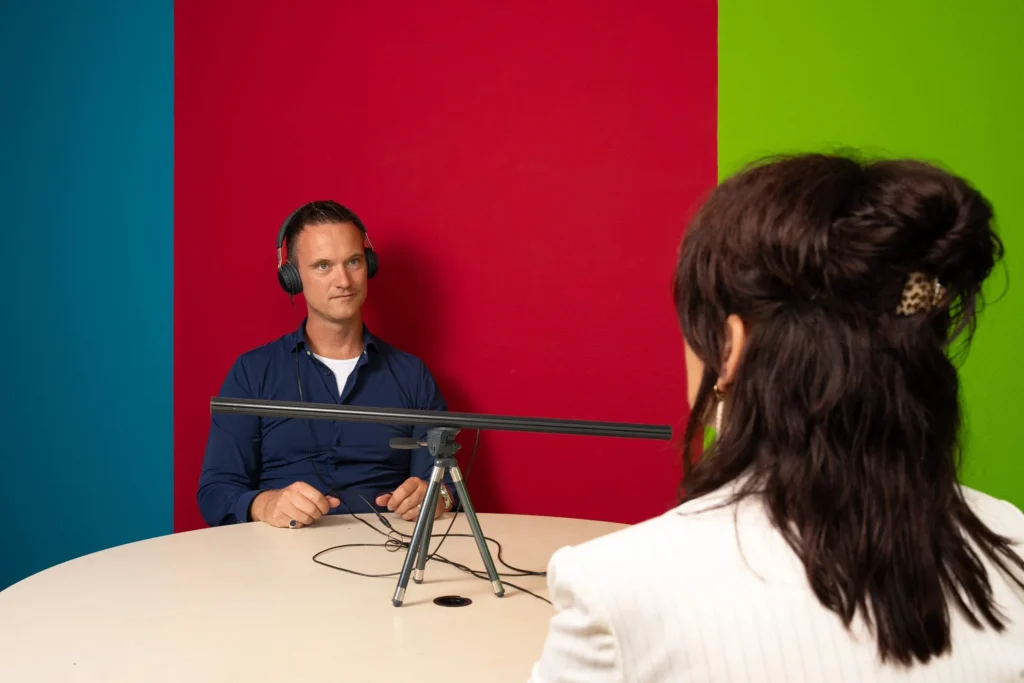
At JongStressVRIJ, art therapy is an experiential treatment in which you literally act out situations you find difficult, together with a training actor. You practice new behaviors in a safe environment, such as setting boundaries, saying no, or expressing your feelings.
Talking about a difficult situation is valuable. But knowing what you want to say is different from actually saying it. At the moment itself, tension sets in. You shut down, get angry, or say yes when you mean no. In art therapy, you bridge that gap. In the practice room, you experience what it feels like to react differently.
The training actor plays the person you find difficult to deal with. A manager, a family member, a partner, or someone who hurt you in the past. You decide how far you go. Afterwards, you receive feedback: how did you come across, and how did your new behavior affect the other person?
Art therapy or art therapy?
The name can be confusing. By 'art therapy,' many people mean a creative therapy in which you work with drawing, painting, or clay. With us, 'artistic' means acting out. You reenact situations and practice real reactions. It is therefore a form of role-playing, not creative therapy with drawing materials.
Why are some situations so difficult?
Whether you easily stand up for yourself often depends on what you have experienced in the past. Perhaps there was little room for your opinion at home. Maybe you were bullied, or experienced that anger led to problems. Your body has learned from this to be cautious.
In a tense situation, you automatically fall into an old reaction: fight, flight, or freeze. You become aggressive, you avoid the conversation, or you stiffen and don't know what to say. That is not a weakness. It is a protective reaction that was once useful. In art therapy, you learn to recognize this reaction and practice a new, healthier way of responding. You also learn how to withdraw in a healthy way from a situation that does not feel safe.
Do you recognize this?
Art therapy may be suitable if you recognize yourself in one or more of these signs:
- You often say yes when you actually mean no.
- You find it difficult to set boundaries, at home or at work.
- You feel insecure in social situations or around people in positions of authority.
- You only realize afterwards what you wanted to say.
- You avoid conflicts, even if it costs you a lot.
- You sometimes react more intensely than you want to and regret it later.
- You are dreading a specific conversation, for example with your supervisor or a family member.
Who is art therapy suitable for?
Art therapy is suitable for young people and adults who want to learn to stand up for themselves more firmly. It helps with social insecurity and avoidance, with little self-confidence and at fear of failure in conversations or presentations.
Situations that people practice with us include, for example:
- A conversation with your supervisor about workload or salary.
- Setting a boundary with your parents, in-laws, or a friend.
- Discussing a conflict with your partner calmly.
- Reacting to someone who belittles you or puts you under pressure.
- A job interview or a difficult conversation at school.
Do you want to work on standing up for yourself on a broader level? Then this is right for you. assertiveness training Rely heavily on this. We often combine those two.
How does art therapy work?
Every treatment is different, because every situation is different. Usually, the process looks like this:
- To register. You can sign up via the form, by phone, or via WhatsApp. There is no waiting list and you do not need a referral letter.
- Introduction. We will contact you to briefly discuss your request for assistance. You will have an intake appointment scheduled within 3 weeks.
- Intake. You tell us in which situations you get stuck and what you want to achieve. Together, we choose the situations you will practice with.
- Prepare. We discuss the situation in detail: who the other person is, what usually happens, and what you would like to do.
- Acting out with the actor. You role-play the situation with the training actor. You can always pause, start again, or try something else.
- Feedback and debriefing. You hear how you came across and what your behavior did to the other person. Then you practice again, with what you have learned.
- Apply and evaluate. You try out the new behavior in your daily life. In the next session, we discuss how that went.
Therapist and training actor Joost
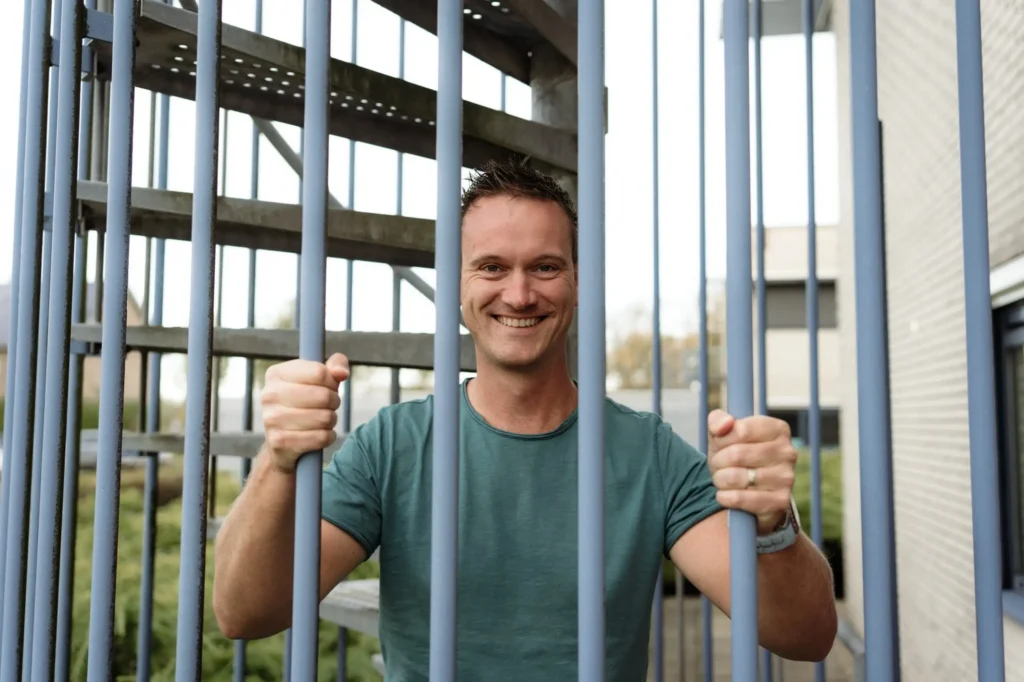
The role-plays are facilitated by Joost, who runs the practice together with Priscilla. He is both a therapist and a training actor. This allows him to step into a role and step out of it again, to discuss what happened with you. You can find more about us at the team.
Art therapy falls under the WEEBER® method. We developed this method ourselves based on our practical experience. It combines multiple forms of therapy in a single session.
What are the benefits of art therapy?
By practicing, something changes in your body and in your mind. You have already done it once, so the next time it is less scary. What people notice, for example:
- They feel more confident in conversations that were initially nerve-wracking.
- They dare to say no more often and set their boundaries.
- They remain calmer when someone contradicts them.
- They understand better how they come across to others.
- They are less bothered by worrying afterwards about what they should have said.
Do you dare?
Art therapy requires courage. It is daunting to practice something you normally avoid. You don't have to be able to do it all at once. We build it up gradually, at your pace, and you remain in control.
Art therapy on location
The role-plays take place at our practice, because then you actually have the actor opposite you. We have two practices: Zwaagdijk-Oost (Zaadmarkt 2B) and Tuitjenhorn (Oostwal 2). People from all over North Holland and West Friesland come here.
Preparatory discussions and evaluations can also be conducted via online therapy, with a secure video connection.
Costs and reimbursement of art therapy
The cost of art therapy depends mainly on the number of sessions you need. JongStressVRIJ is a private practice. Therefore, basic health insurance does not cover the treatment.
This allows us to work without diagnoses, without standard protocols, and without a waiting list. No file will be sent to your health insurer. You can find the current rates on the page. investment and rates.
Frequently asked questions about art therapy
What can I expect from an art therapy session?
You begin with a brief conversation about the situation you want to practice. Then, you role-play it with the training actor, who takes on the role of the other person. You can stop or start again at any time. After each exercise, you receive feedback and we discuss what you noticed. You go home with a concrete experience that you can use.
Is art therapy suitable for everyone?
Art therapy can be helpful for many people, especially if you want to work on assertiveness, setting boundaries, and expressing yourself. It is suitable for young people and adults from diverse backgrounds. You do not need to have acting talent. It is not about acting well, but about practicing real reactions in a safe environment.
How long does art therapy treatment last?
That varies from person to person and depends on your goals. If you want to prepare for one specific conversation, a short series of sessions may be sufficient. If you want to work on your self-confidence more broadly, we will take more time. We make an assessment during the intake, and we evaluate together along the way.
Can I combine art therapy with other treatments?
Yes, that often works very well. Insights gained from conversations become stronger when you practice them. Within the WEEBER® method, for example, we combine art therapy with assertiveness training or cognitive behavioral therapy. In consultation with your therapist, we will determine which combination best suits your situation.
Is art therapy the same as creative therapy?
No. In creative or art therapy, you usually work with drawing, painting, or clay. In JongStressVRIJ, art therapy means acting out situations with a training actor. It is a form of role-playing. So, you practice with real conversations and reactions, not with drawing materials.
What if practicing becomes too daunting?
We discuss this beforehand and during the exercise. You decide how intense the role-play is. The actor can play more softly or more firmly, and you can always take a break. We build it up step by step. This way, it feels exciting enough to learn from, but never unsafe.
Starting art therapy?
Do you want to feel more confident in situations that are currently stressful? Sign up via the form, call 0226 791234, send a WhatsApp message to 06 25395536, or email info@jongstressvrij.nl. We will contact you, and you will have an intake scheduled within 3 weeks.
Art therapy in the neighborhood
Our practices are located in West Friesland and the Alkmaar region. Read more about a psychologist in Zwaagdijk, Tuitjenhorn, Hoorn or Alkmaar.