

Table of contents
- What is play therapy?
- Do you recognize this in your child?
- Who is play therapy suitable for?
- How does play therapy work?
- What are the benefits of play therapy?
- Play therapy in practice
- Costs and reimbursement of play therapy
- Frequently asked questions about play therapy
- Starting play therapy?
- Play therapy in the neighborhood
What is play therapy?
Play therapy is a form of psychotherapy for children in which a child receives help through play with what is bothering them. Through play, a child can naturally show what they feel and experience, even if they do not yet have the words for it.
For adults, talking is the most natural way to process something. For children, it is playing. Play is the language in which they discover and understand the world. A child who has experienced something unpleasant often reenacts it. With dolls, cars, in the sandbox, or in role-playing. In this way, they come to terms with what has happened.
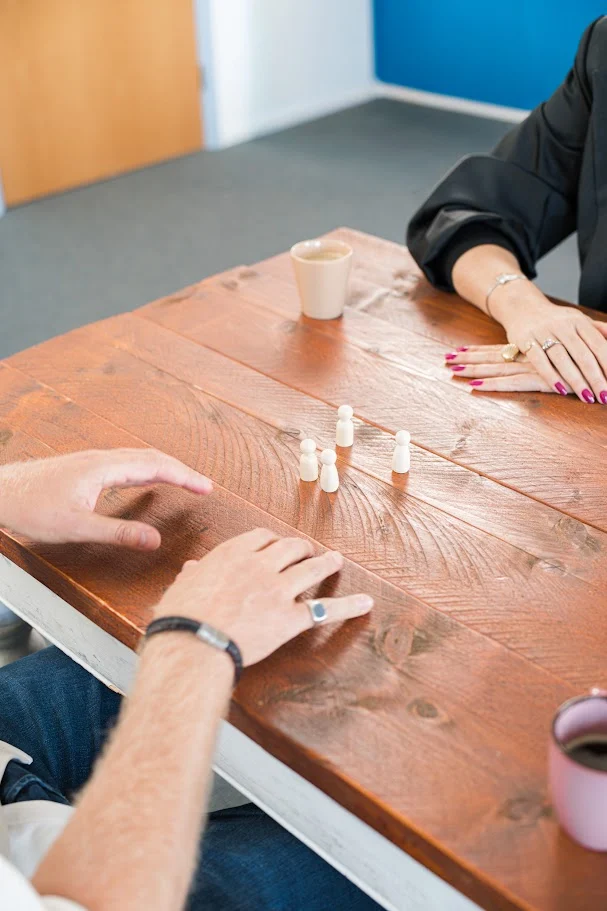
In play therapy, we use that power consciously. The therapist observes, joins in the play, and sometimes names what the child seems to be feeling. In this way, a child feels seen. Slowly, space is created to process difficult feelings and find new ways to cope with them.
Why the game works
Many children find it difficult to put their feelings into words. A question like "How do you feel?" often elicits a shrug. Play brings to light emotions and thoughts that would otherwise remain hidden. Moreover, playing feels safe. A child remains in control, and that instills confidence. As a result, they dare to show things in play that they would never say in a conversation.
Do you recognize this in your child?
Every child goes through a difficult period from time to time. Has your child been experiencing one of these signs for a longer period? Then play therapy can help:
- Your child is often anxious, easily startled, or has many worries.
- Your child has tantrums or gets angry easily.
- Your child withdraws and plays little with other children.
- Your child sleeps poorly or often has nightmares.
- Your child has experienced something significant, such as a divorce, loss, or hospitalization.
- Your child is being bullied or has difficulty with social interactions.
- Your child does not talk about what is bothering them, even though you notice that something is wrong.
- Your child has low self-confidence or often says negative things about themselves.
Who is play therapy suitable for?
Play therapy is primarily intended for young children and children of primary school age. It is suitable for children who are emotionally unbalanced and unable to talk well about their feelings. For example, after trauma or a bad experience, bee fear and worries, in case of insecurity or problems with friends.
We always look at what suits your child. We use practical tools that match your child's character and age. Sometimes we combine play therapy with another approach. If your child has a clear unpleasant memory, EMDR can help. Read more about EMDR for children aged 6 to 12 or EMDR for toddlers and preschoolers.
The role of parents
Parents are the most important people in a child's life. That is why we involve you closely in the play therapy. In addition to the sessions with your child, there are parent meetings. During these meetings, we explain what we observe and discuss how you can support your child at home. Do you notice that your child's behavior evokes strong emotions in you? Then... mirror therapy be a valuable addition.
Is there a risk of unsafety at home? Then contact Veilig Thuis on 0800-2000.
How does play therapy work?
Every child is different, so every treatment is too. Usually, the process looks like this:
- To register. You can register your child via the form, by phone, or via WhatsApp. There is no waiting list, and you do not need a referral letter.
- Introduction. We will contact you to briefly discuss your needs. You will have an intake appointment scheduled within 3 weeks.
- Intake with parents. You tell us what you see in your child, what has happened, and what you hope. This way, we get a clear picture.
- Getting to know your child. Your child is introduced to the therapist and the play area in a relaxed atmosphere.
- Game sessions. Your child plays in a safe environment. The therapist observes, plays along where helpful, and provides support where necessary. Your child sets the pace.
- Parent-teacher meetings. In between, we discuss with you how things are going and what you can do at home.
- Evaluation and conclusion. Together, we look at what has changed and how your child retains what has been learned.
Play therapy falls under the WEEBER® method. We developed this method ourselves based on our practical experience. It combines multiple forms of therapy in a single session.
What are the benefits of play therapy?
Through play therapy, a child grows and becomes emotionally stronger. What parents notice, for example:
- Their child expresses feelings more often in words or in a quiet manner.
- There are fewer tantrums and less anxiety.
- Their child sleeps better and is more relaxed.
- Their child makes contact with other children more easily.
- Their child feels more confident and more themselves.
Some children show rapid progress. Others need more time to open up. That is normal. We follow your child's pace.
Play therapy in practice
The play sessions take place at our practice. We have two practices: Zwaagdijk-Oost (Zaadmarkt 2B) and Tuitjenhorn (Oostwal 2). Families from all over North Holland and West Friesland come here.
Play works best when your child is actually in the play area. Parent-teacher meetings can take place via online therapy, with a secure video connection. That is useful if it is difficult to come to the practice together.
Costs and reimbursement of play therapy
The cost of play therapy depends primarily on the number of sessions and parent consultations. JongStressVRIJ is a private practice. Therefore, basic health insurance does not cover the treatment.
This is how we work: without diagnoses, without labels, and without a waiting list. No file regarding your child will be kept by the health insurer either. You can find the current rates on the page. investment and rates.
Frequently asked questions about play therapy
For which children is play therapy suitable?
Play therapy is suitable for children who have difficulty talking about their feelings. This includes children who have experienced a traumatic event, who are insecure or anxious, or who struggle with other children. For them, playing is the most natural way to express themselves. During the intake, we will determine together whether play therapy is right for your child.
How exactly does play therapy work?
Your child plays in a safe play area with materials such as dolls, animals, cars, a sandbox, or drawing supplies. The therapist observes, joins in, and helps where necessary. During play, feelings and thoughts surface that your child finds difficult to put into words. In this way, they can process them and learn new ways to cope.
How quickly do you notice the effect of play therapy?
That depends on your child and the situation. Some children show change after just a few sessions. Others need more time to feel safe and open up. That is not a bad sign. We evaluate regularly with you and discuss together how things are going and whether anything else is needed.
What can I expect as a parent?
You can expect to stay well-informed through parent-teacher meetings. You will receive tips to support your child at home. You will often see that your child shows emotions more easily and learns to cope better with difficult feelings. Sometimes things get a little more restless at first as things surface. We will discuss that together as well.
Am I present at the play sessions as a parent?
Usually, your child plays alone with the therapist. This way, they have their own safe space. With young children or in the beginning, it can be nice for you to stay for a while. We will coordinate this with your child. We discuss what your child shows during the sessions with you during parent meetings, while respecting your child's privacy.
Is play therapy also for adults?
Play therapy is primarily intended for children. Adults can also benefit greatly from experiential methods in which not everything is done through talking. For them, we use different forms within the WEEBER® method. During the intake, we determine which approach suits you best.
Starting play therapy?
Do you want to help your child feel comfortable in their own skin again? Sign up via the form, call 0226 791234, send a WhatsApp to 06 25395536, or email info@jongstressvrij.nl. We will contact you, and you will have an intake scheduled within 3 weeks.
Play therapy in the neighborhood
Our practices are located in West Friesland and the Alkmaar region. Read more about a psychologist in Zwaagdijk, Tuitjenhorn, Hoorn or Alkmaar.